.png)
Hormone-Linked Interstitial Cystitis: Cycle, Perimenopause and Menopause Flares

Updated: Aug 15
Hormonal change can influence bladder and pelvic symptoms, but there is no single ‘hormonal IC’ mechanism. Some people flare before a period, around ovulation, during perimenopause or after menopause. The useful clue is a repeatable timing pattern—not an assumption that oestrogen is always too high or always too low.
In simple terms: Hormone-Linked is one IC Ally pattern family. It describes bladder symptoms that repeatedly change with the menstrual cycle, perimenopause, menopause or another clear hormonal transition.

Clues that may support a hormone-linked pattern
Flares recur in a similar window before menstruation, during bleeding or around ovulation
Symptoms changed noticeably after stopping contraception, pregnancy, birth or another hormonal transition
Bladder, vulval or urethral symptoms appeared or changed during perimenopause or after menopause
Dryness, pain with sex, recurrent urinary symptoms or tissue sensitivity accompany the bladder pattern
Sleep disruption, migraine, bowel changes, reactivity or pelvic-floor tension rise in the same window
One difficult month is not enough to establish a pattern. Track at least three cycles when possible, and remember that irregular perimenopausal cycles may require a longer view.
How hormones may influence bladder sensation
Sex hormones can affect urogenital tissues, blood flow, immune signalling, pain processing and pelvic-floor behaviour. Small studies have found cycle-related differences in bladder pain sensitivity. Experimental work also suggests that oestradiol can influence bladder mast-cell activity, which may help explain why some ovulation flares include allergy-type or gut-reactive symptoms.
At the other end of the spectrum, lower-oestrogen tissue changes can contribute to dryness, urinary burning, recurrent urinary symptoms and pain with sex. These mechanisms can coexist with IC/BPS, pelvic-floor guarding or infection and need individual assessment.
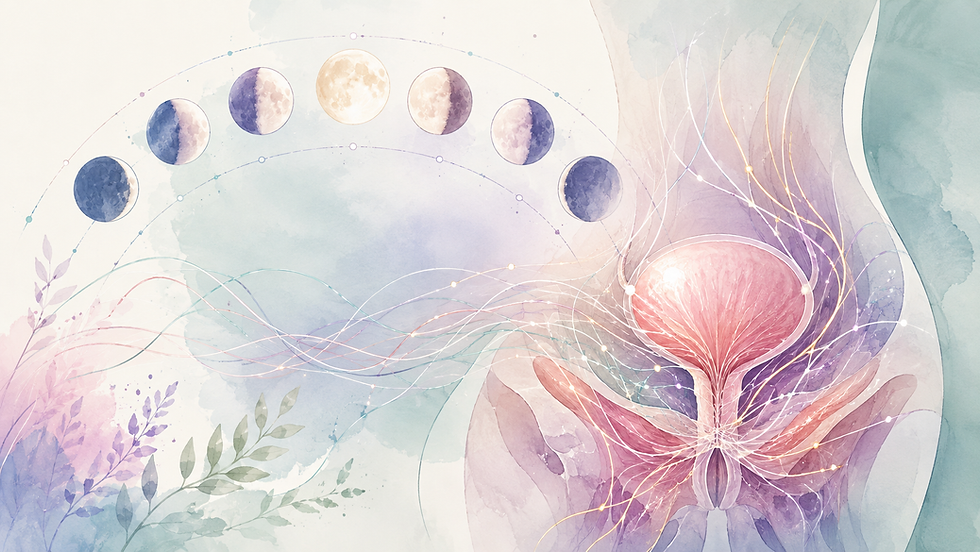
Ovulation flares do not automatically mean ‘too much oestrogen’
A pre-ovulatory flare can be a meaningful timing clue, but it does not prove that a blood hormone level is abnormal. The body may be reacting to rapid hormonal change, altered sensory processing, pelvic-floor responses or an overlapping Histamine & Reactivity pattern.
Likewise, a menopause-related flare does not prove that low oestrogen is the whole explanation. Bladder-lining sensitivity, infection, vulvovaginal tissue change, stress, sleep and pelvic-floor tension may all contribute.
What to track across three cycles
Day of cycle, bleeding, suspected ovulation and cycle length
Bladder pain, pressure, urgency, frequency, nocturia and burning
Vulval dryness, pain with sex and pelvic-floor tightness
Sleep, stress, migraine, bowel symptoms and allergy-type clues
Foods, hydration, exercise and any new products or medicines
What helped and how long the flare lasted
Use the IC Ally symptom tracker to view cycle timing beside other variables. The free Phenotype Identification Aid can help identify whether Hormone-Linked is dominant or overlapping.

A gentle management pathway
1. Confirm the timing before changing treatment
Use three cycles of data where possible. This protects you from chasing a single flare and helps a clinician see whether the same window repeats.
2. Prepare for predictable windows
Protect sleep, simplify known triggers, keep familiar foods available, reduce constipation and use pelvic-floor relaxation before the usual flare begins. The goal is preparation, not perfect control.
3. Assess tissue and pelvic-floor overlap
Dryness, pain with sex, vulval burning or recurrent urinary symptoms deserve assessment. Pelvic-floor overactivity can both respond to pain and become a continuing driver.
4. Discuss hormonal treatment individually
Hormonal medicines, contraception changes and local vaginal oestrogen require a clinician who can consider age, symptoms, examination findings, bleeding history and individual risks. Natural self-management should sit alongside—not replace—appropriate medical care.
When to speak to a clinician
New bleeding after menopause, bleeding between periods or very heavy bleeding
Possible pregnancy, fever, flank pain, visible blood in urine or urinary retention
New severe pelvic pain, a pelvic mass sensation or symptoms unlike your usual IC pattern
Persistent dryness, painful sex or recurrent urinary symptoms
A marked symptom change during perimenopause or after starting or stopping hormones

Your next step
Read the IC Ally six-pattern guide and use the Phenotype Identification Aid. If food also seems important, test it separately with the Food Elimination Tracker so cycle timing is not confused with several simultaneous diet changes.
Frequently asked questions
Can IC flare around ovulation?
Yes. Some people report ovulation-related flares, and experimental research suggests hormonal change may affect bladder sensory or mast-cell pathways. A repeated tracked pattern is more useful than one isolated flare.
Why does IC feel worse before my period?
Possible contributors include hormonal change, increased pain sensitivity, pelvic-floor guarding, bowel changes, sleep disruption and overlapping reactivity. The balance differs between people.
Can perimenopause make bladder symptoms change?
Yes. Irregular hormonal shifts, sleep disruption, tissue changes and pelvic-floor or nervous-system effects may alter bladder symptoms during perimenopause.
Does menopause cause interstitial cystitis?
Menopause does not have one proven direct causal relationship with IC/BPS. Lower-oestrogen urogenital changes can mimic or amplify bladder symptoms and should be assessed.
How long should I track a hormonal IC pattern?
Track at least three cycles when possible. With irregular perimenopausal cycles, a longer timeline may be needed to identify repeatable windows.
Evidence and further reading
A gentle medical reminder
This article is for general education and tracking. It does not diagnose a hormonal disorder or recommend hormone treatment. Seek medical advice for postmenopausal bleeding, possible pregnancy, fever, flank pain, visible blood, urinary retention, new severe pain or symptoms that differ from your usual pattern.


Comments