

IC and Pelvic Floor Clenching: How to Spot the Pattern

Pelvic-floor clenching can amplify urgency, pressure, urethral burning and pain. It often happens automatically as the body guards. A tight pelvic floor is not necessarily strong, and Kegels without assessment can worsen some people.
In simple terms: muscles that never fully let go can become painful and disrupt urination. Pattern recognition and assessment are safer than forcing them down.
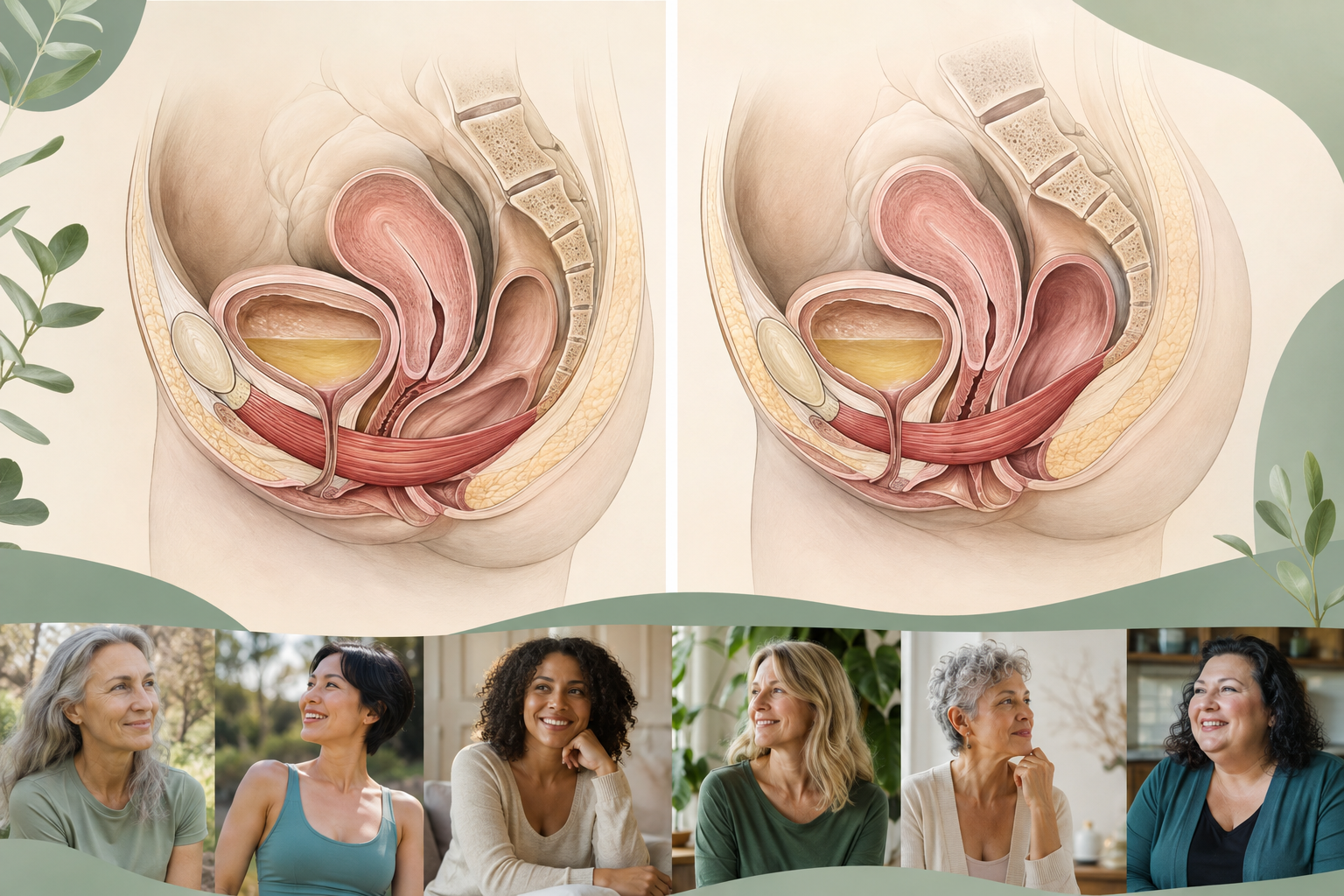
Common clues
Jaw, gluteal or abdominal gripping; symptoms after sitting, sex or bowel movements; hesitancy; incomplete emptying; and pain spreading to the urethra, perineum, tailbone, hips or rectal area.
A non-invasive check
Notice breath-holding, let the jaw soften, compare comfortable positions and a short walk, and do not repeatedly test or stretch into pain.
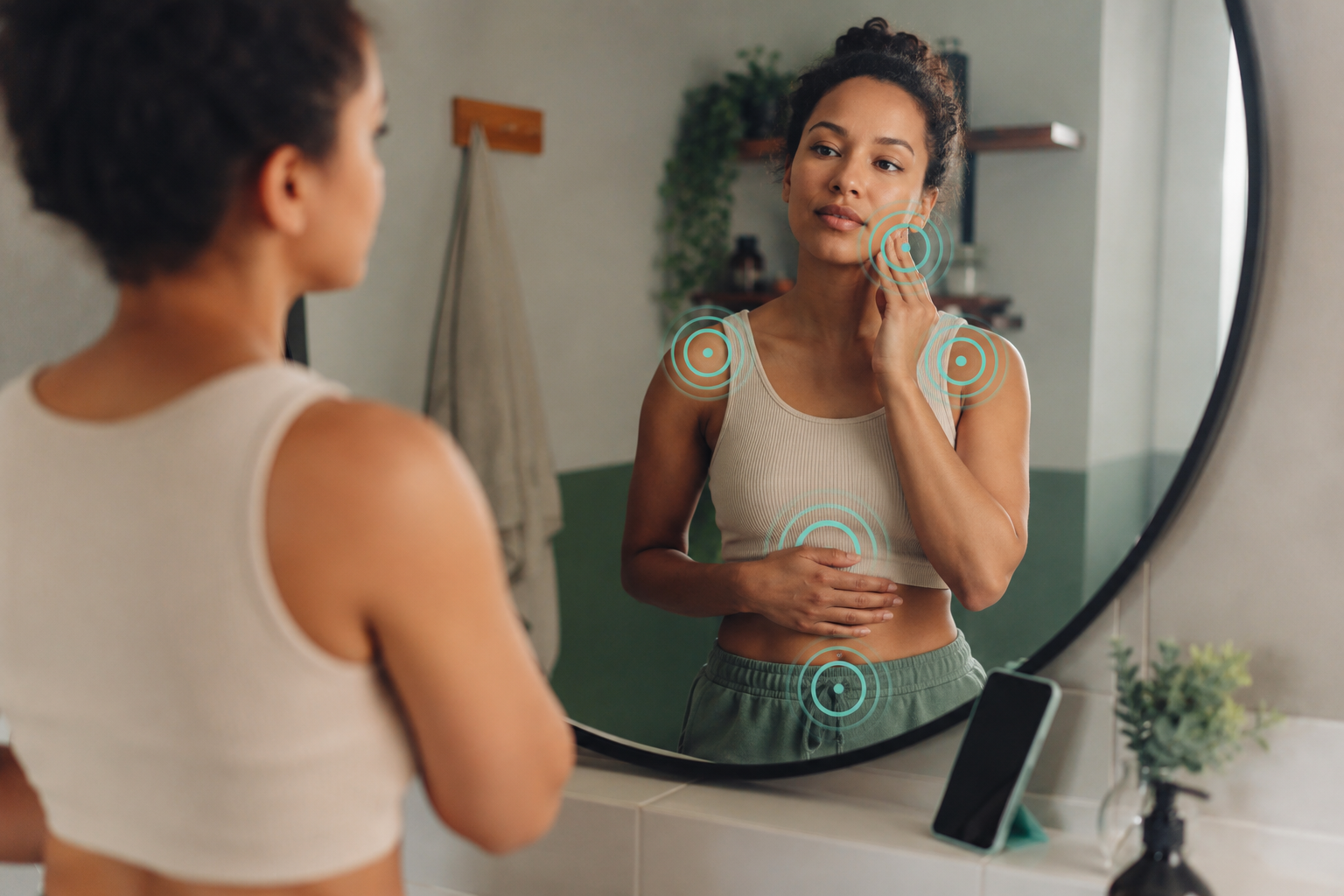
What to avoid
Do not assume strengthening is needed, strain to urinate, use internal devices without guidance, or dismiss infection, skin, hormone, bladder or nerve causes.
Phenotype bridge
This sits mainly in the pelvic-floor pathway but can follow bladder-lining pain, infection-aftereffect or nervous-system sensitisation. Cycle, allergy and food patterns may reveal overlap.
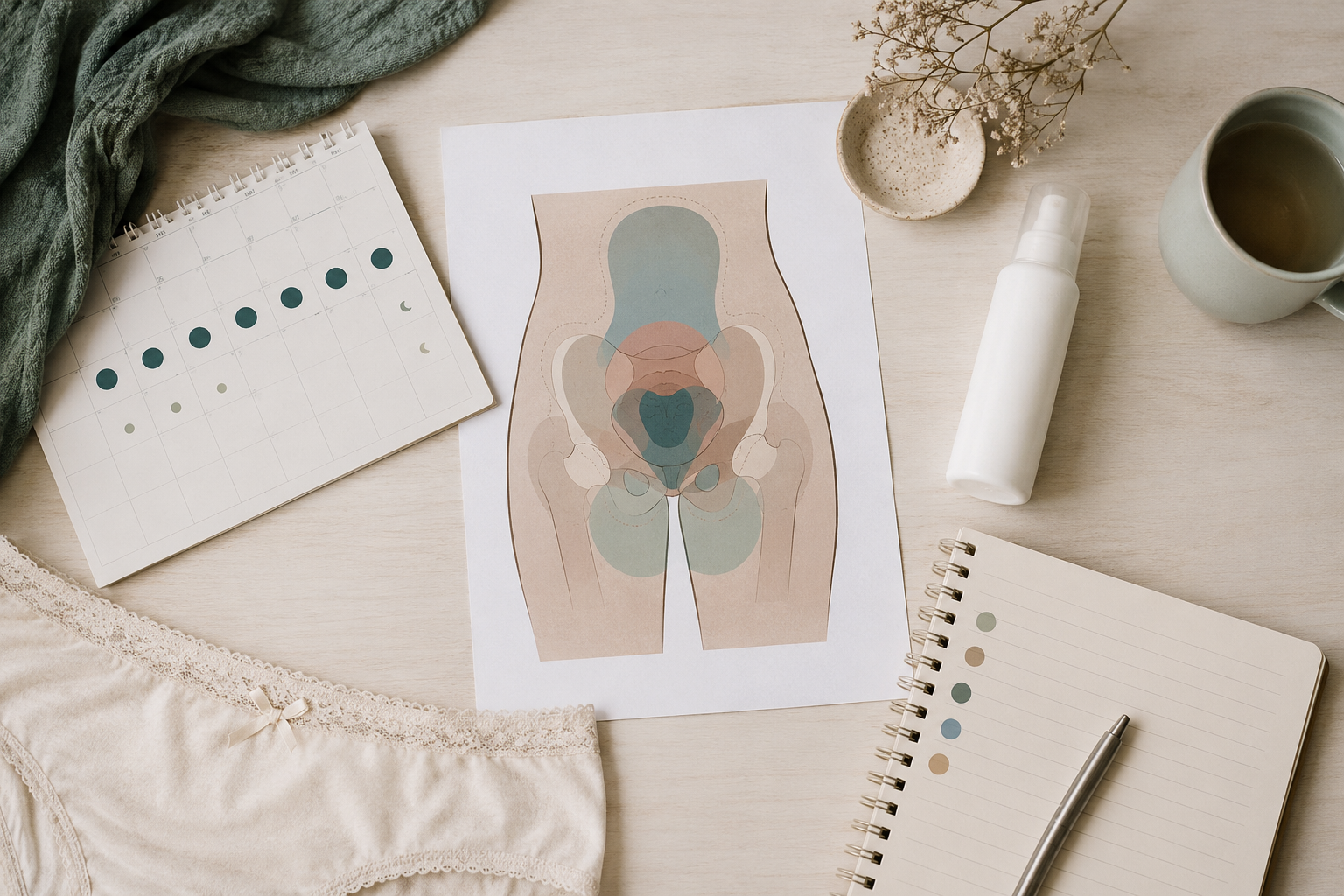
Assessment and help
A pelvic-health physiotherapist can assess breathing, posture and muscles. Internal examination is optional and consent-based. Seek review for new urinary difficulty, numbness, weakness or control changes.
Related guides
Build your personal pattern
Track symptoms and overlapping exposures together.
Food can cut across every pathway. Test suspected effects without making the diet permanently restrictive.
Frequently asked questions
Should I do Kegels for IC?
Not automatically. Strengthening may worsen an overactive pelvic floor.
References
Important medical disclaimer
This article is educational and is not a diagnosis or a substitute for personalised medical advice. Seek urgent help for fever, chills, visible blood, flank pain, vomiting, inability to pass urine, pregnancy with urinary symptoms, or new severe or rapidly worsening pain. Discuss persistent or changing symptoms, medicines, supplements and diet changes with an appropriate clinician.

Comments