.png)
The Ultimate IC Food List: Triggers & Safe Foods

Updated: Jul 23
Quick answer: what can you eat with IC?
Build simple meals from foods that are commonly better tolerated, then test uncertain foods one at a time. Commonly reported triggers include coffee, alcohol, citrus, tomatoes, spicy foods, chocolate, artificial sweeteners and MSG—but your pattern matters most.
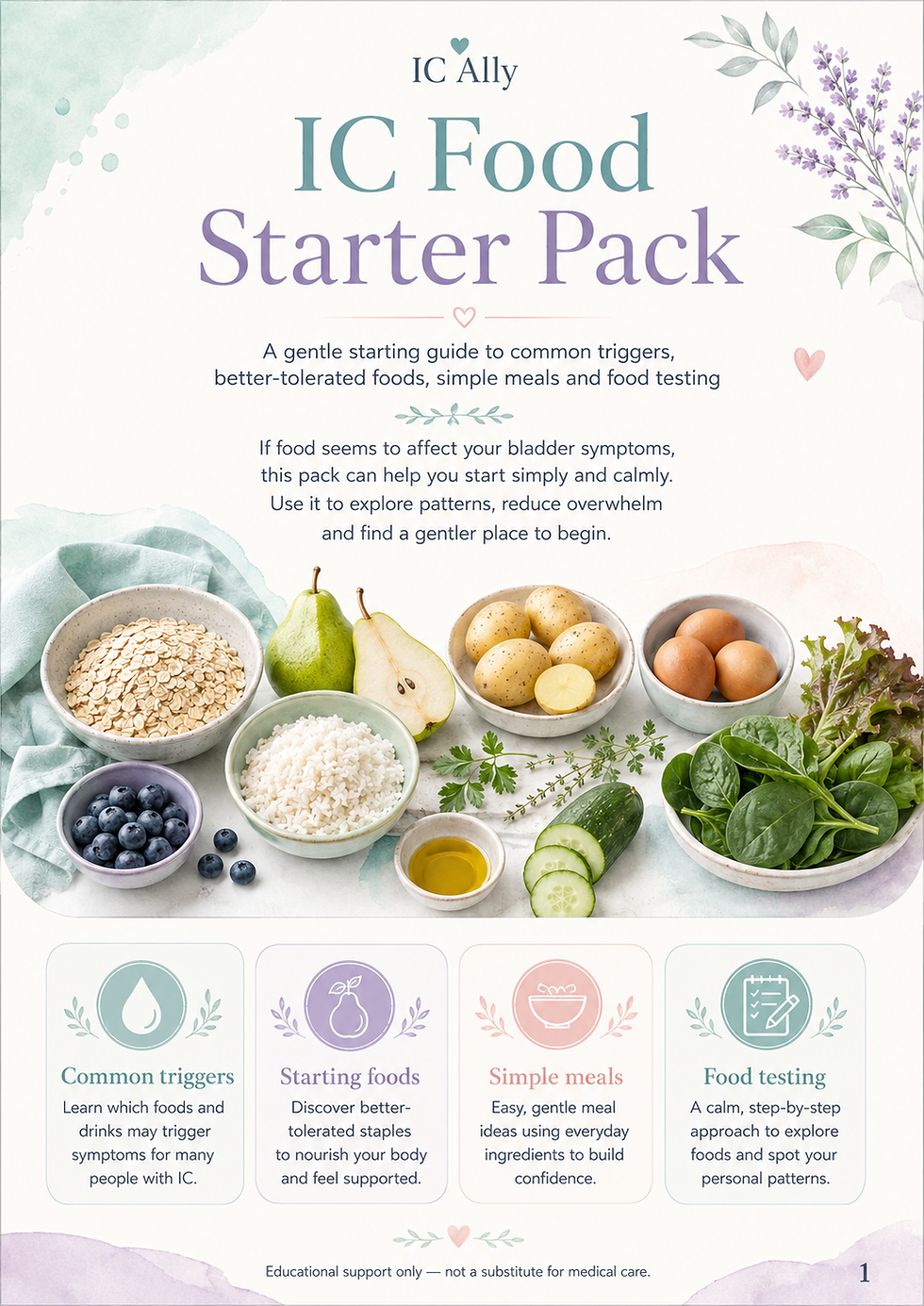
Free 10-page IC Food Starter Pack: Download the printable guide with common triggers, better-tolerated starting foods, simple meals, flare-day guidance and a food-and-symptom tracker. Download the free IC Food Starter Pack →
At a glance
Commonly better-tolerated starting points: plain proteins, rice, oats, potatoes, many fresh vegetables, pears, blueberries, olive oil and simple home-cooked meals.
Test individually: dairy, gluten, soy, nuts, avocado, bananas, strawberries, herbal teas, seasoning blends and leftovers.
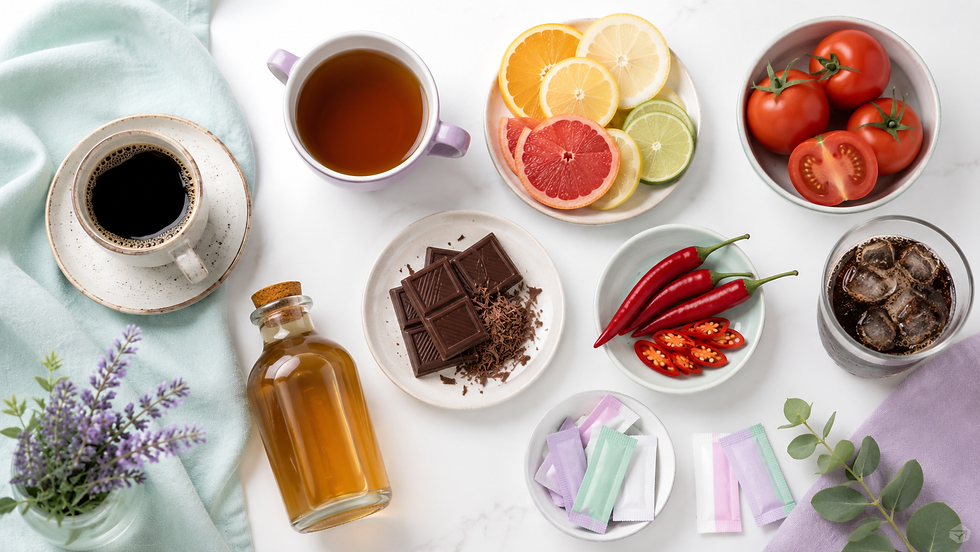
Commonly reported triggers: coffee, caffeinated tea, alcohol, citrus, tomatoes, chilli, chocolate, fizzy drinks, vinegar, artificial sweeteners and MSG.
Free IC food resources: Download the printable food list, food-and-symptom diary, meal planner and elimination-diet guide from IC Ally’s free resources.
Before using this IC food list
Use this as a testing guide, not a permanent restriction list. Begin with foods you already tolerate, change one thing at a time and return foods wherever you can. Over-restriction can reduce nutritional variety and create food anxiety. Seek dietetic or clinical advice if your diet becomes very limited or you lose weight unintentionally.
Why can food affect IC symptoms?
Research remains limited, but many people report dietary sensitivities. Possible explanations include sensitivity to acidic or spicy substances, effects from caffeine and alcohol, reactions to additives, and overlap with gut, allergy-type, hormonal or nervous-system patterns. A reaction does not prove a food is damaging the bladder.
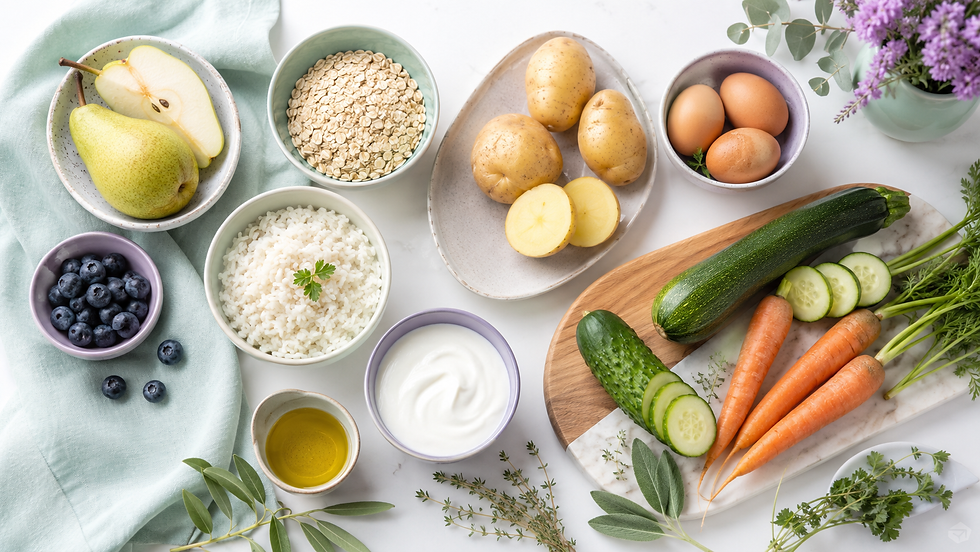
IC food list: 100+ foods to explore
These are starting options, not guarantees. Choose plain versions first and check packaged foods for hidden acids, sweeteners, flavourings and preservatives.
Proteins
Chicken, turkey, eggs, fresh white fish, salmon, trout, cod, haddock, prawns, lean beef, lamb, pork, tofu and tempeh. Freshly cooked protein is easier to test than smoked, cured or heavily processed versions.
Grains, starches and breads
White rice, brown rice, basmati rice, jasmine rice, oats, quinoa, couscous, barley, buckwheat, polenta, plain pasta, rice noodles, potatoes, sweet potatoes, parsnips, plain bread, wraps, pitta, oatcakes, rice cakes and unsalted crackers. Test sourdough, highly seeded breads and acidic preservatives individually.
Vegetables
Carrots, broccoli, cauliflower, cabbage, green beans, peas, courgette, cucumber, lettuce, spinach, kale, pak choi, celery, mushrooms, asparagus, Brussels sprouts, squash, pumpkin, swede, turnip, beetroot, sweetcorn, avocado, edamame and fresh herbs. Onions, garlic and raw vegetables may need individual testing, particularly when gut symptoms overlap.
Fruits
Pears, blueberries, melon, watermelon, apples, grapes, mango, papaya, peaches, nectarines, apricots, dates and coconut. Ripeness, portion size and preparation may change tolerance. Test bananas, strawberries, raspberries and cherries individually.
Dairy and alternatives
Milk, lactose-free milk, mild cheese, mozzarella, ricotta, cottage cheese, cream cheese, plain yoghurt, oat milk, rice milk and coconut milk. Check flavoured products for acids, sweeteners or flavourings. Dairy symptoms may reflect lactose or gut sensitivity rather than IC.
Fats, toppings and gentle flavour
Olive oil, rapeseed oil, butter, ghee, coconut oil, sesame oil, tahini, pumpkin seeds, sunflower seeds, chia seeds, flaxseed, basil, parsley, dill, coriander, rosemary, thyme, sage, cinnamon and salt.
Simple snacks
Plain popcorn, rice cakes, oatcakes, crackers, pretzels, boiled eggs, cheese cubes, pear slices, blueberries, melon, yoghurt, porridge pots, homemade flapjacks, plain muffins, cucumber sticks, carrot sticks, hummus without lemon, and tolerated nuts or seeds.
Prefer a printable version? Download the free 10-page IC Food Starter Pack with the food guide, meal ideas and tracker in one PDF.
Foods and drinks commonly reported as IC triggers
These are test foods, not lifelong bans:
Coffee, energy drinks and caffeinated tea
Alcohol, particularly wine, beer and cocktails
Oranges, lemons, limes, grapefruit and citrus juice
Tomatoes, passata, ketchup, salsa and tomato sauces
Chilli, hot peppers, cayenne and very spicy foods
Chocolate and cocoa
Fizzy drinks and some sparkling waters
Vinegar, pickles and strongly fermented foods
Artificial sweeteners such as aspartame and saccharin
MSG and intensely flavoured seasoning packets
Cranberry products and sharp fruit juices
Processed meats, smoky marinades and acidic dressings
Dose matters. A small amount may be comfortable when a full portion is not. Hydration, stress, cycle stage, constipation, pelvic-floor tension and an existing flare can also affect symptoms.
IC-friendly toppings, sauces and swaps
Try olive oil with herbs; butter and parsley; ricotta with basil; cream cheese and cucumber; tahini thinned with water; avocado with herbs if tolerated; a mild white sauce; customised pesto without lemon or chilli; yoghurt with dill; vegetable purée; or mild cheese.
Check pesto, mayonnaise, hummus, stock, gravy, dressings and marinades for acids, tomato, chilli, sweeteners and flavour enhancers.
Easy meal combinations
Breakfast: porridge with pear or blueberries; eggs with toast; plain yoghurt with oats and melon; or a mild cheese and spinach omelette.
Lunch: chicken and rice with cucumber and herbs; baked potato with cottage cheese; egg-and-cucumber sandwich; quinoa with roasted vegetables; or soup without tomato, chilli or acidic stock.
Dinner: baked fish with potatoes and green beans; turkey pasta with a mild herb-and-cream sauce; chicken with rice and courgette; lamb with mash and carrots; or vegetable omelette with bread.
Snacks: rice cakes with cream cheese; melon; pear; yoghurt; boiled egg; plain popcorn; oatcakes; or tolerated nuts.

What to eat during a flare
Simplify rather than starve yourself. Choose familiar tolerated foods such as rice or potatoes, eggs or simply cooked protein, porridge and mild vegetables. Avoid introducing several new foods or supplements at once. Hydrate normally rather than forcing large volumes quickly.
How to test foods without over-restricting
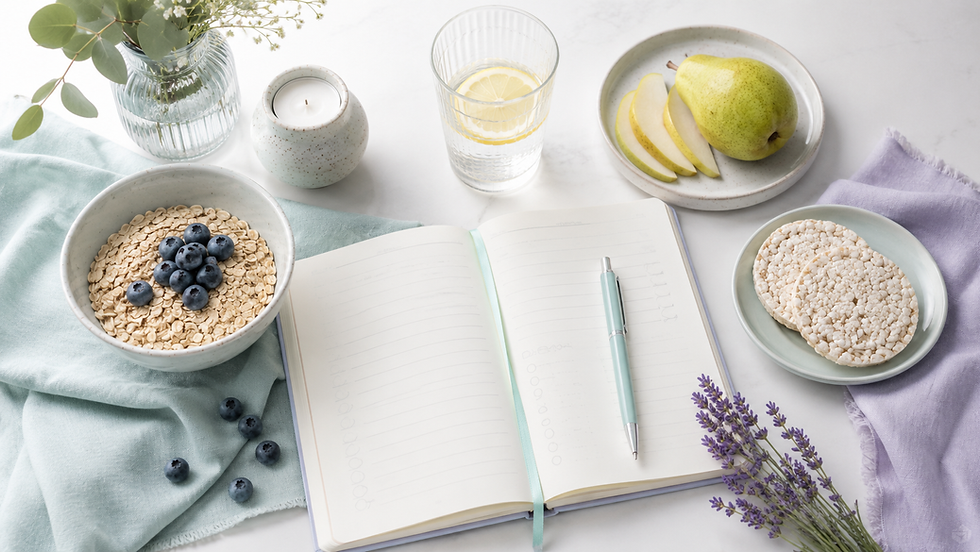
Establish a baseline. Track symptoms, meals, drinks, stress, sleep, bowel changes, cycle stage and activity.
Simplify selectively. Remove only your strongest suspected triggers while keeping meals adequate.
Reintroduce one item. Test a realistic portion while keeping the rest of the day familiar.
Watch the timing. Record symptoms over the following hours and next day.
Repeat unclear tests. One bad day is a clue, not proof.
Return foods where possible. Keep your final diet as broad and enjoyable as your body allows.
Use the IC Ally food and symptom resources to support the process.
Eating out with IC
Check menus in advance and ask for sauces, dressings and marinades on the side. A simple protein with rice, potatoes or vegetables is easier to assess than a mixed dish. Ask for food without chilli, citrus, tomato or vinegar. Carry a familiar snack.
After a possible food trigger
Return to familiar meals, hydrate normally and record what happened. Avoid removing many foods after one bad day; look for repeated patterns.
Seek medical advice for new or unusual symptoms, fever, difficulty passing urine, severe worsening pain, or visible blood that has not been assessed. IC symptoms can overlap with infection and other urinary or pelvic conditions.
Food may be only one part of your IC pattern
Symptoms may also reflect pelvic-floor tension, constipation, hormones, histamine or allergy-type reactivity, nervous-system sensitisation, stress, infection after-effects or mixed factors.
Use the free IC phenotype identification aid to explore your possible patterns. For structured support, visit IC Ally programmes or Start Here.
Stop guessing which foods matter. Download the free IC Food Starter Pack for structured food-testing steps and a printable symptom tracker.
Frequently asked questions
Are carrots IC-friendly?
Carrots are commonly used as a lower-acid starting vegetable. Test them plainly cooked before glazed, pickled or heavily seasoned versions.
Is pesto IC-friendly?
It depends on the recipe. Shop-bought pesto may contain lemon, citric acid, aged cheese, garlic or preservatives. A homemade basil, olive oil and mild cheese version is easier to customise.
What are the best toppings for IC?
Try olive oil and herbs, butter, ricotta, cream cheese, yoghurt and dill, tahini, mild cheese, or customised pesto.
Can an elimination diet help IC?
A 2026 systematic review found individualised elimination promising, but evidence remains limited. Elimination should be temporary and followed by reintroduction.
Evidence and further reading
This article is educational and does not diagnose or treat illness. Dietary changes should sit alongside appropriate medical care. Seek personalised advice if you are pregnant, underweight, managing allergies, diabetes, kidney disease, an eating disorder, significant gastrointestinal disease or another condition requiring nutritional supervision.

Great info. Been looking so something like this. I'll have a look af what else you have on your resource page thanks