

IC and Stress Flares: Why Symptoms Can Spike

Stress can make IC/BPS pain, pressure and urgency feel stronger. That does not mean stress caused the condition or that symptoms are “all in your head”. Threat-alert systems, sleep, muscle guarding and bladder signalling can interact.
In simple terms: a stressed nervous system may turn up the volume on sensitive bladder and pelvic signals. Reducing arousal is one supportive layer, alongside checking infection, pelvic-floor, hormone, food and other contributors.
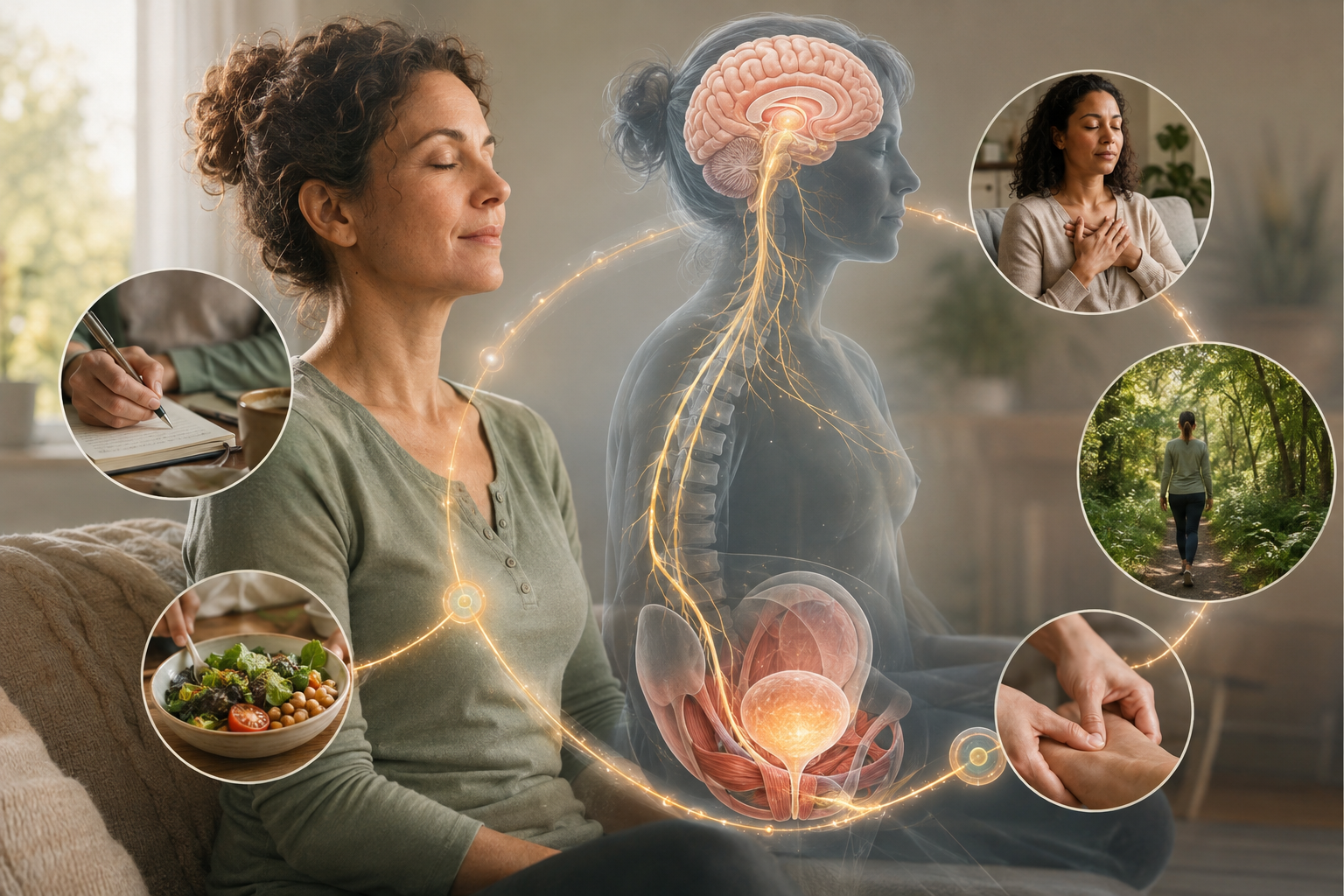
How stress may amplify a flare
Autonomic arousal can increase vigilance; muscle guarding can increase pressure; and poor sleep can reduce pain tolerance. Stress may coincide with histamine or hormone-linked reactivity in some people.
Clues to track
Look for repeatable timing after deadlines, conflict, travel or overload; breath-holding or clenching; sleep disruption; and whether gentle movement or decompression changes symptoms.
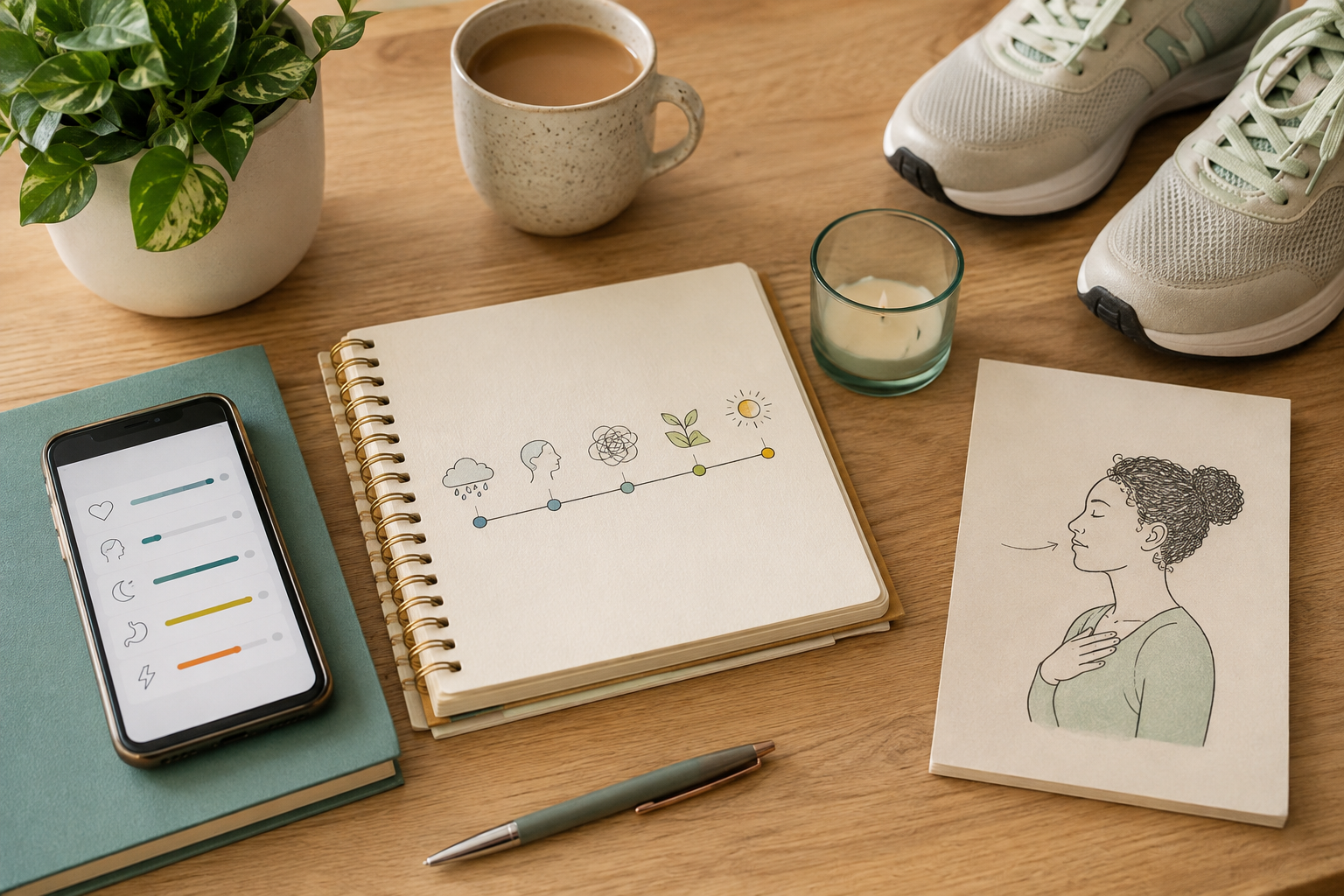
Phenotype bridge
This may fit the nervous system/stress pathway, often overlapping with pelvic-floor guarding. Itching, flushing or food reactions bring histamine/reactivity forward; cycle timing, infection onset and pain with filling point to other pathways.
What the evidence says
Research finds associations between perceived stress and IC/BPS pain or urgency. Association does not prove stress caused the disease or that stress reduction alone will resolve it.

When to speak to a clinician
Arrange assessment for new or changing symptoms. Ask about pelvic-health support for clenching and validated mental-health or sleep support that does not dismiss physical symptoms.
Related guides
Build your personal pattern
Track symptoms and overlapping exposures together.
Food can cut across every pathway. Test suspected effects without making the diet permanently restrictive.
Frequently asked questions
Can stress cause an IC flare?
Stress may amplify symptoms in some people, but is rarely the only factor.
References
Important medical disclaimer
This article is educational and is not a diagnosis or a substitute for personalised medical advice. Seek urgent help for fever, chills, visible blood, flank pain, vomiting, inability to pass urine, pregnancy with urinary symptoms, or new severe or rapidly worsening pain. Discuss persistent or changing symptoms, medicines, supplements and diet changes with an appropriate clinician.


Comments