.png)
What Is Interstitial Cystitis? Symptoms, Triggers and First Steps
By IC Ally | Reviewed by H.Tamaklo (Registered Nurse)

A gentle place to start
Interstitial cystitis, also called bladder pain syndrome or IC/BPS, is a long-term bladder and pelvic pain condition. It can cause bladder pain, pressure, urinary urgency, urinary frequency, urethral burning, pelvic discomfort, and flares that may come and go. Unlike a typical UTI, IC symptoms can happen even when urine tests do not show infection.
In simple terms, interstitial cystitis is a chronic condition linked with bladder or pelvic pain, urinary urgency, urinary frequency, pressure, burning and symptom flares. It is usually considered when symptoms continue and other causes, such as infection, have been checked.
If you have found this page after months, or even years, of confusing bladder symptoms, take a breath. IC can feel frightening, especially when tests look “normal” but your body is clearly telling you something is wrong. Many people describe the same exhausting loop: symptoms flare, they wonder if it is a UTI, the urine test comes back negative, and they are left trying to explain pain that no one else can see.
That does not mean the pain is imagined. It means the bladder, pelvic floor, immune system, hormones, nervous system, or surrounding tissues may be behaving in a more sensitive, reactive way than usual.
IC Ally’s approach is simple: rather than assuming every person with IC has the same problem, we look for patterns. What flares you? What calms things down? What else is happening in your body at the same time? Over time, those clues can help you build a more personalised way forward.
This article is educational and is not a substitute for medical advice. If you are worried about symptoms, have new or worsening pain, or suspect infection, please speak with a qualified healthcare professional.
What is interstitial cystitis?
Interstitial cystitis, or IC, is often used interchangeably with bladder pain syndrome. You may also hear the terms painful bladder syndrome, IC/BPS or chronic bladder pain.
In simple terms, IC describes a pattern of bladder-related pain or discomfort that lasts over time and is not fully explained by a standard urinary tract infection or another obvious cause. Symptoms can vary from person to person. For some, the main issue is bladder pressure. For others, it is burning, urgency, frequency, pelvic pain, pain after sex, or a constant “I need to wee” feeling.
One of the most frustrating things about IC is that it does not always behave neatly. A person may feel almost normal for a few days, then suddenly flare after a stressful week, a period, a new supplement, intimacy, a long car journey, a glass of wine, or seemingly nothing at all.
That unpredictability is part of why tracking matters. Many people only spot the pattern after looking back over a few weeks.
Common interstitial cystitis symptoms
IC symptoms can be mild, moderate or severe. They may be daily, occasional, cycle-linked, stress-linked, food-linked, or flare-based.
Symptom | How it may feel |
Bladder pain or pressure | Aching, heaviness, sharp pain, pressure or fullness low in the abdomen |
Urinary urgency | A strong need to wee, sometimes even when little urine comes out |
Urinary frequency | Needing to wee more often than usual during the day |
Night-time urination | Waking at night to wee |
Urethral burning | Burning, stinging or raw feeling in the urethra |
Pelvic pain | Pain in the pelvis, vulva, vagina, penis, perineum, rectum or lower back |
Pain as the bladder fills | Discomfort that builds before urinating and may ease afterwards |
Pain after sex | Burning, aching, bladder pressure or pelvic floor spasm after intimacy |
Flare-ups | Periods where symptoms become stronger or more difficult to settle |
Some people feel pain mainly in the bladder. Others feel it more in the urethra, pelvic floor, vagina, lower abdomen, tailbone, hips or back. This is one reason IC can be so confusing. The bladder may be involved, but it may not be the only part of the picture.
Is IC the same as a UTI?
No, but they can feel very similar.
A UTI is usually caused by infection and may show bacteria, white blood cells, nitrites or other signs on urine testing. IC symptoms can feel like a UTI, but urine tests may repeatedly come back negative or inconclusive.
That said, it is important not to assume every flare is “just IC”. People with IC can still get UTIs. New symptoms, fever, visible blood, flank pain, feeling very unwell, pregnancy, or a sudden change in your usual pattern should be checked.
A helpful way to think about it:
Question | UTI may be more likely if… | IC flare may be more likely if… |
Did symptoms come on suddenly? | Yes, especially with burning and feeling unwell | Sometimes, but often follows a known trigger |
Is there fever or flank pain? | Needs urgent medical advice | Not typical for an ordinary IC flare |
Are urine tests positive? | Often, though not always | Often negative |
Do symptoms repeat around triggers? | Less typical | Common |
Do antibiotics reliably help? | Often | Usually not, unless infection is present |
This is not a diagnosis tool. It is simply a way to understand why good medical testing and symptom tracking both matter.
Why does IC feel different from person to person?
This is one of the most important things to understand early on: IC is not always one single bladder problem.
Some people have more bladder lining sensitivity. Some have pelvic floor tightness. Some flare around hormones. Some notice allergy, histamine or mast-cell-type patterns. Some develop symptoms after repeated UTIs. Some have nervous system sensitisation, stress flares, widespread pain, or overlapping conditions such as IBS, endometriosis, vulvodynia, fibromyalgia or chronic pelvic pain.
That is why one person may flare from coffee, while another can drink coffee but flares after sitting too long. One person may improve with pelvic floor therapy, while another needs to focus on histamine, hormones or food triggers. One person may feel worse before their period, while another flares after sex or after a bowel movement.
This does not mean your body is random. It often means you have not yet found the right pattern.
Common IC trigger categories
Not everyone has clear triggers, and not every trigger will matter to you. Try not to become afraid of everything. The goal is not to shrink your life. The goal is to notice your own patterns gently and safely.
Common trigger categories include:
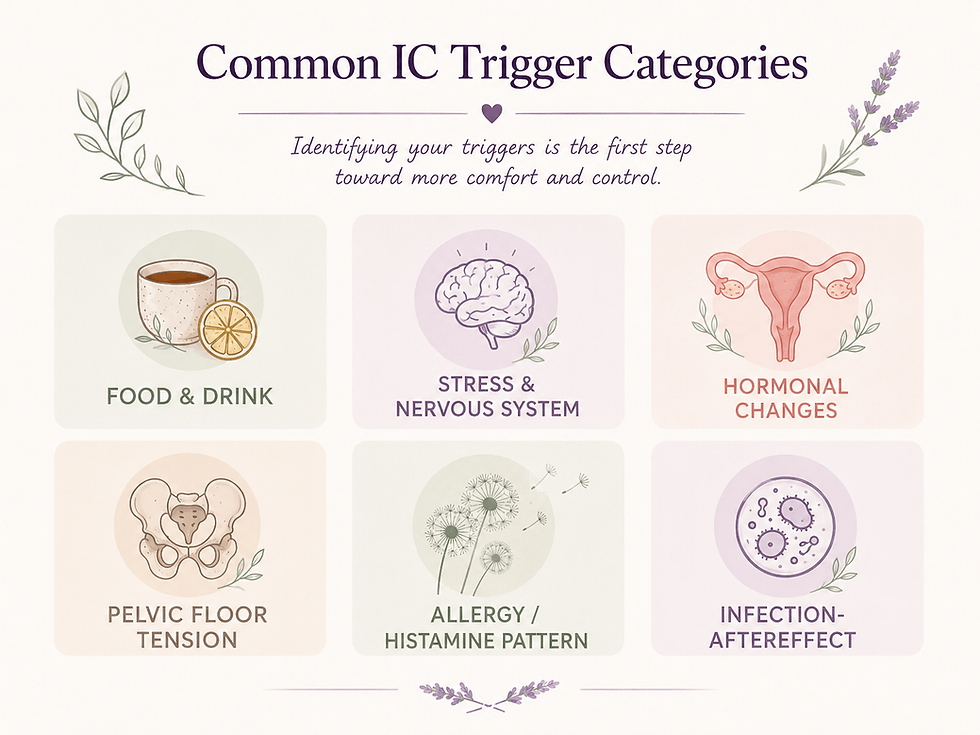
1. Food and drink triggers
Some people notice flares after acidic, spicy, high-histamine, high-oxalate or bladder-irritating foods and drinks. Commonly reported triggers include coffee, alcohol, citrus, tomato, vinegar, fizzy drinks, chilli, artificial sweeteners and some supplements.
This does not mean all of these are “bad” or that you must cut everything out. A structured food diary is usually more helpful than panic-restriction.
2. Stress and nervous system triggers
Stress does not mean your symptoms are “in your head”. Stress can affect muscle tension, inflammation, sleep, pain sensitivity, hormones, mast cells and bladder signalling. Some people flare after arguments, deadlines, poor sleep, grief, overwork or long periods of feeling unsafe.
3. Pelvic floor triggers
Tight or overactive pelvic floor muscles can contribute to urgency, frequency, urethral burning, pelvic aching, pain after sex, tailbone pain, constipation-related flares and difficulty fully relaxing to wee.
This is why Kegels are not always the answer. Some people with IC need pelvic floor relaxation, not strengthening.
4. Hormonal triggers
Some people notice bladder symptoms before their period, during ovulation, during perimenopause, after stopping or starting hormonal contraception, after childbirth, or around menopause. Hormones can influence bladder tissue, vaginal tissue, pelvic floor sensitivity, sleep, histamine and pain processing.
5. Allergy, histamine or mast-cell-type triggers
For some people, bladder symptoms seem to travel with allergy-type symptoms: hayfever, flushing, itching, hives, food reactions, headaches, gut issues, or sensitivity to high-histamine foods. This does not prove MCAS, but it may be a useful pattern to track.
6. Infection-aftereffect or UTI-triggered symptoms
Some people trace the beginning of their symptoms to a UTI, repeated infections, antibiotic courses, thrush, bacterial vaginosis, ureaplasma/mycoplasma concerns, or a period of urinary irritation that never fully settled.
This does not always mean there is an ongoing infection, but it does mean the immune system, bladder lining, pelvic nerves or pelvic floor may have been left sensitised.
The IC Ally phenotype approach
At IC Ally, we use “phenotypes” as a practical way to describe symptom patterns. This is not about labelling you forever. It is about asking: which pattern seems strongest right now?
You may fit one pattern clearly, or you may be mixed. Many people are mixed.
Bladder lining / chemical irritation pattern
This pattern may be more likely if you flare after acidic foods, alcohol, coffee, supplements, concentrated urine, dehydration or certain chemicals. Pain may feel bladder-focused and may worsen as the bladder fills.
Things to track:
food and drink reactions
urine concentration
hydration
pain before and after weeing
acidic or spicy foods
new supplements
Pelvic floor pattern
This pattern may be more likely if symptoms worsen after sex, sitting, bowel movements, stress, exercise, clenching, hip tension or lower back issues. You may feel urethral burning, pelvic aching, tailbone discomfort or a sense of pressure.
Things to track:
pain after sex
constipation or straining
sitting time
pelvic tension
hip, back or tailbone pain
whether relaxation helps
MCAS / histamine pattern
This pattern may be more likely if bladder flares overlap with allergy-type symptoms, high-histamine foods, hayfever seasons, flushing, itching, hives, headaches, gut symptoms or sensitivity to many foods/supplements.
Things to track:
high-histamine foods
allergy symptoms
skin symptoms
flushing or itching
seasonal changes
reactions to supplements or medicines
Hormonal pattern
This pattern may be more likely if flares happen before your period, during ovulation, around perimenopause, after hormonal changes, or alongside vaginal dryness, sleep disruption, mood changes or cycle changes.
Things to track:
cycle day
ovulation
PMS symptoms
bleeding pattern
perimenopause symptoms
vaginal dryness or irritation
Nervous system / stress pattern
This pattern may be more likely if symptoms flare after stress, poor sleep, trauma reminders, anxiety spikes, overwork, emotional strain or nervous system overload. You may also have wider pain sensitivity.
Things to track:
stress level
sleep
emotional load
pain sensitivity
caffeine
relaxation practices
flare recovery time
Infection-aftereffect or UTI-triggered pattern
This pattern may be more likely if your symptoms began after a UTI, repeated UTIs, antibiotics, thrush, vaginal infection or ongoing urinary irritation.
Things to track:
urine test results
antibiotics used
symptom onset timeline
vaginal symptoms
bowel/gut changes
whether symptoms are changing or stable
The helpful question is not “which box do I belong in forever?” It is “what does my body seem to be reacting to most often?”
Use our IC Phynotype tool to get clues on your possible phynotype!
What to track in the first 30 days
The first month after suspected or confirmed IC can feel overwhelming. Try not to track everything perfectly. Track enough to find clues.

IC Ally 30-day tracking checklist
Track once a day if you can:
Bladder pain, 0–10
Urgency, 0–10
Frequency, roughly how often you wee
Burning or urethral discomfort
Night-time waking to wee
Main foods and drinks
Water intake
Stress level
Sleep quality
Cycle day, if relevant
Bowel movements and constipation
Sex or intimacy triggers
Exercise or sitting time
Allergy/histamine symptoms
Supplements or medication changes
What helped, even slightly
A tiny improvement still matters. If a heat pad, gentle breathing, avoiding one drink, sleeping better, pelvic relaxation or changing timing of supplements helps by 10%, that is information.
Try the IC Ally IC symptom tracker app!
Gentle first steps after suspected or confirmed IC
1. Rule out things that need medical care
Before assuming IC, speak with a healthcare professional about urine testing and whether anything else needs to be checked. IC is usually considered after other causes have been ruled out.
2. Start a simple symptom diary
Do not wait until you have the perfect tracker. Start with notes on your phone if needed. Write down symptoms, food, stress, sleep, cycle, bowel movements and anything new.
3. Avoid panic-cutting too many foods
It is understandable to want immediate relief, but cutting too much too quickly can make life miserable and may not show you what actually matters. A gentle elimination approach is usually easier to interpret.
4. Notice your body tension
Many people with bladder pain unknowingly clench their pelvic floor, stomach, jaw or glutes. This can happen because pain makes the body guard itself. Try soft belly breathing, unclenching your jaw, relaxing your shoulders, and letting your pelvic floor drop rather than grip.
5. Hydrate steadily
Both dehydration and over-drinking can aggravate symptoms for some people. Aim for steady, sensible hydration unless your clinician has advised otherwise.
6. Be cautious with new supplements
Natural does not always mean gentle. Introduce one new supplement at a time, at a low and realistic dose, and track for at least several days to a few weeks depending on the supplement.
7. Build a flare kit
A flare kit is a small list of things that help you feel safer when symptoms spike. This may include heat, comfortable clothing, safe foods, breathing exercises, pelvic relaxation, distraction tools, a bladder-friendly drink, and a reminder of when to seek medical advice.
8. Speak to the right professionals
Depending on your pattern, this may include a GP, urologist, pelvic health physiotherapist, gynaecologist, menopause-informed clinician, pain specialist, dietitian or pharmacist.
You do not need to solve everything alone.
What not to panic about
If you are newly diagnosed or suspect IC, it is easy to spiral. These reminders may help:
A flare does not mean you are back to square one.
A negative urine test does not mean your pain is not real.
Having food triggers does not mean food caused everything.
Stress flares do not mean your symptoms are psychological.
Pelvic floor involvement does not mean the bladder is uninvolved.
Needing time to understand your pattern is normal.
You do not have to try every supplement, diet or protocol at once.
Mixed patterns are common.
IC can feel like a maze at first. The aim is to move from panic to pattern recognition.
When to speak to a doctor urgently
Please seek medical advice urgently if you have:
visible blood in your urine, especially if new
fever, chills or feeling very unwell
pain in your side or back near the kidneys
pregnancy with urinary symptoms
new severe pelvic or bladder pain
inability to pass urine
vomiting or dehydration
symptoms of a UTI that are worsening
unexplained weight loss or persistent new symptoms
blood after urination that has not been assessed
Also speak with a healthcare professional if your symptoms are new, changing, severe, or affecting your daily life. IC can overlap with other conditions, and it is important that treatable causes are not missed.
FAQs
What is interstitial cystitis in simple terms?
Interstitial cystitis is a long-term condition linked with bladder or pelvic pain, urinary urgency, frequency, pressure, burning and flares. It is often diagnosed when symptoms persist and other causes, such as infection, have been considered or ruled out.
Why does my bladder hurt when I do not have a UTI?
Bladder pain without a UTI may happen for several reasons, including bladder lining sensitivity, pelvic floor tension, nerve sensitisation, hormonal changes, inflammation, food triggers, stress responses or overlapping pelvic pain conditions. A clinician can help rule out infection and other causes.
Is interstitial cystitis caused by stress?
Stress does not simply “cause” IC, and symptoms are not your fault. However, stress can worsen symptoms in some people by increasing muscle tension, pain sensitivity, sleep disruption, inflammation and nervous system arousal.
Can IC symptoms come and go?
Yes. Many people with IC have flares and calmer periods. Symptoms may change with food, stress, hormones, infections, pelvic floor tension, sleep, sex, bowel habits or other triggers.
What are the first signs of interstitial cystitis?
Early signs may include bladder pressure, pelvic discomfort, urgency, frequency, burning, pain as the bladder fills, pain that eases after urinating, or repeated UTI-like symptoms with negative urine tests.
Can diet help interstitial cystitis?
Diet may affect symptoms for some people, but triggers vary. Rather than cutting out everything, it can help to track foods and symptoms, then test changes gently and systematically.
Is IC the same for everyone?
No. IC can involve different patterns, such as bladder lining irritation, pelvic floor tension, hormonal flares, histamine or mast-cell-type patterns, nervous system sensitivity, or symptoms that began after infection.
Can IC be cured?
There is currently no single guaranteed cure for IC, and no one approach works for everyone. However, many people find ways to reduce flares, understand triggers and improve daily management with the right support and tracking.
Closing thoughts
If you are at the start of your IC journey, you do not need to have all the answers today.
Start small. Track the basics. Notice what your body is already trying to tell you. Ask for medical help when symptoms are new, severe or worrying. And remember: the goal is not to blame your bladder, your diet, your hormones or your stress. The goal is to understand your pattern with enough kindness and clarity that you can begin to feel less lost.
IC Ally was created for exactly this stage — when you know something is wrong, but you need a calmer, clearer way to put the pieces together.

Ready to start spotting your pattern? Use the IC Ally symptom tracker or phenotype aid to begin mapping your symptoms, triggers, cycle, stress, food reactions and flare patterns over the next 30 days.
References and further reading
This article is for educational purposes only and is not a substitute for personalised medical advice. The sources below were used to support the medical and educational information in this article.
American Urological Association (AUA). Diagnosis and Treatment of Interstitial Cystitis/Bladder Pain Syndrome Guideline, 2022.
This guideline provides a clinical framework for the diagnosis and treatment of interstitial cystitis/bladder pain syndrome (IC/BPS).
European Association of Urology (EAU). Guidelines on Chronic Pelvic Pain.
This guideline is useful for understanding bladder pain syndrome as part of a wider chronic pelvic pain picture, including pelvic floor and nervous system involvement.
https://uroweb.org/guidelines/chronic-pelvic-pain
National Institute of Diabetes and Digestive and Kidney Diseases (NIDDK). Interstitial Cystitis / Bladder Pain Syndrome.
This patient-friendly overview explains what IC/BPS is and covers symptoms, diagnosis, treatment options and diet considerations.
NIDDK. Symptoms and Causes of Interstitial Cystitis.
This source explains common IC symptoms such as pelvic discomfort, urinary frequency, urgency, bladder pain and pain related to bladder filling.
NIDDK. Diagnosis of Interstitial Cystitis.
This source explains how clinicians may use urine tests, symptom history, physical examination and bladder diaries to help diagnose IC/BPS or rule out other conditions.
NHS. Bladder Pain Syndrome.
This NHS page gives a UK-based overview of bladder pain syndrome, including symptoms and the fact that treatments may help manage symptoms.
https://www.nhs.uk/conditions/bladder-pain-syndrome/
NICE. Interstitial Cystitis / Bladder Pain Syndrome: The Condition, Current Treatments and Procedure, 2025.
This NICE overview describes IC/BPS as a chronic bladder condition associated with pelvic pain, urgency, frequency and nocturia, and notes that diagnosis can be challenging and by exclusion.
https://www.nice.org.uk/guidance/HTG738/chapter/2-the-condition-current-treatments-and-procedure
Nickel JC, Moldwin R, Lee S, Davis EL, Henry RA, Wyllie MG. Managing Interstitial Cystitis / Bladder Pain Syndrome in Female Patients: Clinical Phenotypes and Management Considerations. Current Medical Research and Opinion. 2022.
This paper supports the idea that IC/BPS can present in different clinical patterns or phenotypes, including bladder-focused and wider systemic presentations.
https://pmc.ncbi.nlm.nih.gov/articles/PMC9851219/
Wolff DT, Tranchina S, Schrepf A, et al. Interstitial Cystitis / Bladder Pain Syndrome Patient Phenotyping. Neurourology and Urodynamics. 2025.
This review discusses bladder-centric, systemic and myofascial pelvic pain phenotypes in IC/BPS, supporting a more personalised pattern-based approach.
https://pmc.ncbi.nlm.nih.gov/articles/PMC12748009/
Rudick CN, Bryce PJ, Guichelaar LA, Berry RE, Klumpp DJ. Mast Cell-Derived Histamine Mediates Cystitis Pain. PLOS ONE. 2008.
This study supports cautious discussion of mast cells and histamine as possible contributors to cystitis-type pain pathways in some people.
https://journals.plos.org/plosone/article?id=10.1371/journal.pone.0002096


Comments