.png)
Urine Acidity and Bladder Pain: What Matters?

Urine pH can change with diet, hydration, medicines and health conditions, but a lower pH does not automatically explain bladder pain. In a small randomised crossover study of women with IC, instilling acidic versus neutral-buffered solution produced no significant difference in pain. People can still have individual food and drink triggers; the key is not to treat a home pH strip as a diagnosis or chase a target urine pH without medical advice.
In simple terms: Food acidity, stomach acidity and urine pH are different concepts. Track the exact food, symptoms and hydration; do not assume that making urine more alkaline will treat IC.

When this question may be relevant
A pattern is more useful than one isolated reaction. Clues may include:
Concentrated urine during low fluid intake feels more provocative
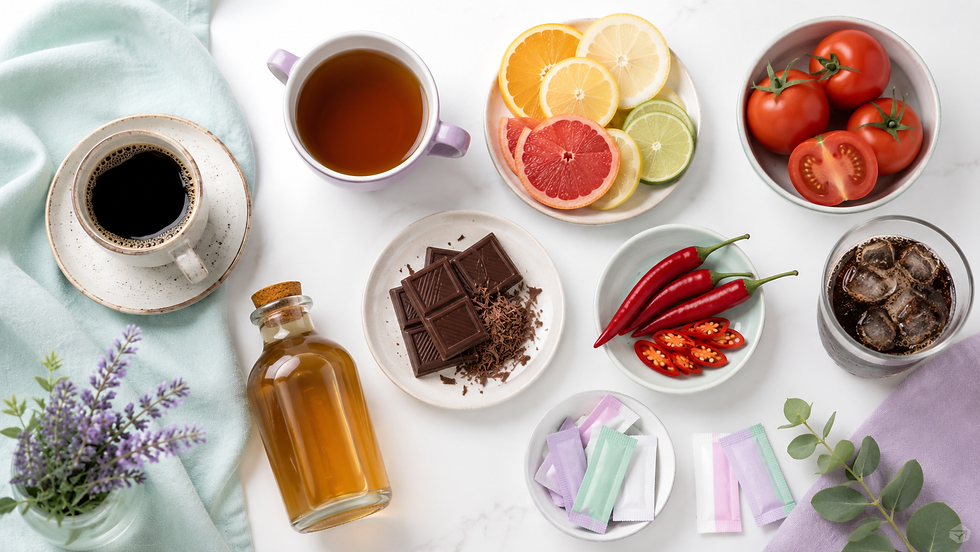
Citrus, tomato, coffee or fizzy drinks trigger symptoms, but not every acidic food does
Symptoms track additives, caffeine or carbonation more closely than pH
Home urine pH varies without matching pain
Alkalising products seem helpful sometimes but the result is inconsistent
What the evidence can—and cannot—tell us
The body tightly regulates blood pH. Food can influence urine composition, but a food described as acidic does not map neatly onto the pH bathing the bladder.
In the small crossover trial, researchers compared solutions at physiological acidic and neutral-buffered pH in 26 women with IC and found no statistically significant pain difference. The sample was small, but it challenges a universal acid-equals-pain explanation.
Questionnaire studies still show that certain acidic foods and drinks are commonly reported triggers. Those products also contain caffeine, carbonation, alcohol, vitamin C, spices or other compounds, and the evidence is self-reported rather than proof of one mechanism.

Three common assumptions to avoid
“Acidic urine means IC is getting worse”
No. Urine pH alone does not measure IC activity.
“Alkaline water treats IC”
Evidence is insufficient, and changing urine chemistry is not risk-free for everyone.
“All acidic foods must be removed”
No. Individual testing is more useful than broad restriction.
How this fits the IC Ally pattern framework
Food is cross-cutting; it is not a seventh phenotype. A reaction may overlap with Bladder Lining/Chemical Irritation, Histamine & Reactivity, Pelvic Floor, Hormone-Linked, Nervous System/Stress or Infection-Aftereffect clues. Use the six-pattern guide and Phenotype Identification Aid to keep the wider picture visible.
What to track
Food, drink, brand, dose and preparation
Fluid intake and urine colour rather than pH alone
Pain, urgency, frequency and burning over time
Caffeine, carbonation, alcohol, vitamin C and additives
Medicines, infection symptoms and kidney-stone history
Use the Food Elimination Tracker for exact foods and reintroduction, and the IC Ally symptom tracker for cycle, sleep, stress, pelvic and flare variables.

A safer step-by-step test
1. Start with hydration consistency
Avoid deliberate overdrinking; keep intake steady enough to interpret the test.
2. Test the product, not the category
Lemon, coffee and a fizzy drink are not interchangeable exposures.
3. Do not chase strip readings
Only measure urine pH when a clinician has explained why and how results will be used.
4. Avoid routine alkalising remedies
Sodium bicarbonate and citrate products can affect blood pressure, kidneys, electrolytes and medicines.
5. Review the wider pattern
Bladder-lining sensitivity may overlap with pelvic-floor, hormone, histamine/reactivity and stress pathways.
When to speak to a clinician
Fever, flank pain, visible blood, retention or suspected UTI
Kidney disease, recurrent stones, heart disease or high blood pressure before alkalising products
Persistent vomiting, confusion, weakness or palpitations
New severe symptoms or pregnancy with urinary symptoms
A familiar IC label should not delay assessment of new, severe or changing urinary symptoms.
Your practical next steps
Download the free 10-page IC Food Starter Pack, compare foods with the Ultimate IC Food List, and follow the one-food testing method. Keep restriction time-limited with the gentle elimination-diet guide and printable personal food chart.

Frequently asked questions
Does acidic urine cause IC pain?
Not necessarily. A small randomised IC study found no significant pain difference between acidic and neutral-buffered instillations.
Do acidic foods always make urine acidic?
Food chemistry and urine chemistry are not the same, and effects vary with the whole diet and physiology.
Should I test urine pH at home?
Not routinely for IC unless a clinician has given a specific reason and interpretation plan.
Is baking soda safe for bladder pain?
It can affect sodium load, blood pressure, kidneys, electrolytes and medicines, so it is not a universal self-care remedy.
What should I track instead?
Track exact products, hydration, symptom timing and co-triggers; these are usually more actionable than a single pH reading.
Evidence and further reading
A gentle medical reminder
This article is for general education and pattern tracking. It does not diagnose IC/BPS, food intolerance, hyperoxaluria, kidney stones or any underlying condition and is not a substitute for individual medical advice. Seek urgent care for fever, flank pain, visible blood in urine, inability to pass urine, pregnancy with new urinary symptoms or new severe pain. Do not start a restrictive diet or mineral supplement without appropriate advice when kidney, heart, bowel, pregnancy or medication factors apply.

Comments